On the opening day of the BRICS Summit in New Delhi on 12th of September 2026, member nations unanimously adopted the New Delhi Declaration, a far‑reaching document underscoring the need to work together for unrestricted global trade.
Prime Minister Narendra Modi proposed the declaration at the conclusion of the first day’s session at Bharat Mandapam.
In his remarks, Modi stressed that the changing world cannot be steered by outdated institutions, calling for reforms in representation, responsiveness, and rule‑making to shape a fairer global order.
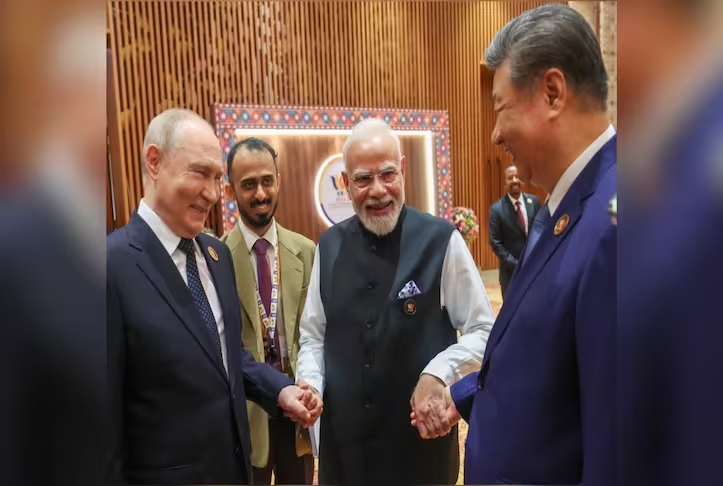
India’s presidency of BRICS comes at a time of strategic turbulence, with wars in West Asia and Ukraine disrupting energy supply routes. The summit drew global attention as China’s President Xi Jinping, Russia’s President Vladimir Putin, and Iran’s President Masoud Pezeshkian joined Modi at the high table.
President Xi’s arrival in New Delhi marked his first visit in seven years, signaling efforts by the two Asian giants to thaw relations.
Chinese state media, including Global Times, highlighted Xi’s remarks that conflict in West Asia “does not serve the common interests of the international community,” noting the heavy toll on regional populations.
On Friday, Modi held bilateral talks with Putin, agreeing to deepen ties, and with Pezeshkian, raising concerns over freedom of navigation and the safety of ship crews.
Opening the two‑day summit on Saturday, Modi observed that the Global South often stands in the front row of crises but remains in the back row of decision‑making. He urged transforming this “pyramid of privilege” into a “platform of partnership.”
In this spirit, Modi proposed jointly formulating 10 proposals for global governance reform, to be consolidated into a BRICS reform roadmap by the next summit.
On the United Nations Security Council (UNSC), he emphasized that reform “can no longer be postponed,” insisting negotiations must be tied to a clear time frame and concrete outcomes. He further argued that voting power, leadership roles, and policy priorities within financial institutions must reflect today’s economic realities.