Indian Navy has acquired another high-speed warship to hunt down subsurface threats.
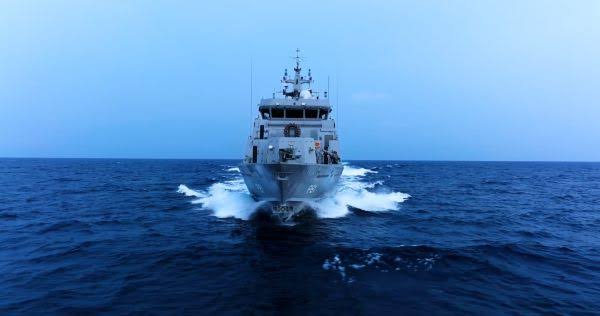
On Wednesday the 22nd of July 2026, INS Malvan, the second of the indigenously designed and built Mahe-class Anti-Submarine Warfare Shallow Water Craft (ASW-SWC), was commissioned at Karwar on the western seabed.
The Chief of Air Staff, Air Chief Marshall AP Singh had specially flown-in to preside over the commissioning ceremony.
The Western Fleet Commander, Vice Admiral Sanjay Vatsayan was also present along with other senior military officials and reps from Cochin Shipyard Limited (CSL), Kochi, the fabricators of this warship were also in attendance.
The ship carries deep historical and cultural significance as it derives its name from the historical coastal town of Malvan in Maharashtra, a region intrinsically linked to the illustrious maritime heritage of Chhatrapati Shivaji Maharaj.
The vessel also encapsulates the legacy of her predecessor, an inshore Indian Naval Minesweeper that remained in service till 2003.
INS Malvan is the second of eight ASW-SWCs, being indigenously built by CSL, Kochi, and the sixth of 16 ASW-SWCs to be commissioned into Indian Navy.
With over 80 percent indigenous content, the ship reinforces the Government of India’s vision of Aatmanirbhar Bharat and India’s expanding ecosystem of naval design, equipment, system integration, and growing self-reliance in defence shipbuilding.
The vessel is equipped for Underwater Surveillance, Anti-Submarine Warfare (ASW) operations, and Low Intensity Maritime Operations (LIMO) along with Mine Warfare capability.
The vessel will further bolster coastal defence, littoral security, and enhance Maritime Domain Awareness.
The crest of INS Malvan carries the ‘Bagh Nakha’ (Tiger’s Claw), symbolising bravery, warfare tactics, agility, and audacity, resonating with the ship’s ethos to attack rapidly and strike silently. The waves surrounding ‘Bagh Nakha’ reflect the vast sea surrounding the coasts and the Indian Navy’s unwavering resolve to remain ever vigilant, ever ready, and steadfast in safeguarding the nation’s seas and sovereignty.
The ship’s motto, ‘Silent Claws’, embodies lethality, stealth, and the ability to strike the adversary swiftly.
The commissioning of INS Malvan adds a significant punch to the Indian Navy’s Anti-Submarine Warfare capabilities.
A Mahe-class Anti-Submarine Warfare Shallow Water Craft (ASW-SWC) is a specialized, high-speed warship designed to detect, track, and neutralize subsurface threats—specifically hostile submarines, midget subs, and uncrewed underwater vehicles (UUVs)—in shallow coastal and littoral waters.
Acting like a “security guard” right outside India’s maritime doors, these ships form the nation’s first line of coastal defense.
Built indigenously by Cochin Shipyard Limited (CSL), they are replacing the aging Abhay-class corvettes to secure vital maritime approaches and chokepoints.
The primary responsibilities and operational capabilities of a Mahe-class vessel include:
- Submarine Hunting & Underwater Surveillance
- Shallow-Water Dominance: Standard deep-water frigates and destroyers struggle to navigate and operate sensors in heavily congested, shallow littoral zones. The Mahe-class is optimized explicitly for these narrow boundaries.
- Advanced Sonar Grids: The craft uses indigenously developed hull-mounted sonars and low-frequency variable depth sonars (VDS) to find stealthy targets hiding near the sea floor.
- Lethal Firepower: Once an enemy submarine is spotted, the craft can execute precision strikes using its dual triple-tube lightweight torpedo launchers and multi-functional anti-submarine rockets.
- Mine Warfare & Defensive Operations
- Mine Laying: They are equipped with advanced defensive systems to carry out complex mine-laying tasks in strategic sea lanes to block enemy advance.
- Mine Countermeasures: Inheriting the legacy of the old naval minesweepers they are named after, these ships assist in mapping and clearing coastal mine threats.
- Littoral Security & Patrols
- Low-Intensity Maritime Operations (LIMO): They conduct regular coastal patrols to neutralize asymmetric threats like sea-bound terrorists, pirates, or hostile fast-attack craft.
- Surface Defense: For fighting off light surface craft, drones, and aerial threats, they carry a 30mm rapid-firing naval gun and stabilised remote-control guns.
- Fleet Integration & Mobility
- Tri-Service & Fleet Networking: They act as a cohesive node, sharing data and coordinating missions seamlessly with larger naval surface combatants, aircraft, and regional shore authorities.
- Water-Jet Propulsion: Driven by three diesel engines mated to high-speed water jets, they possess extreme manoeuvrability, low acoustic signatures (stealth), and a top speed of 25 knots.