NavIC Gets a Major Boost as ISRO Successfully Launches NVS-03, Strengthening India’s Space-Based Navigation Network
In another landmark achievement for India’s space programme, the Indian Space Research Organisation (ISRO) on Saturday successfully launched the next-generation NVS-03 navigation satellite, advancing the country’s quest for a fully self-reliant and robust satellite navigation capability.
The mission not only strengthens the NavIC constellation but also marks a significant technological milestone with the deployment of an indigenous atomic clock and enhanced navigation capabilities.
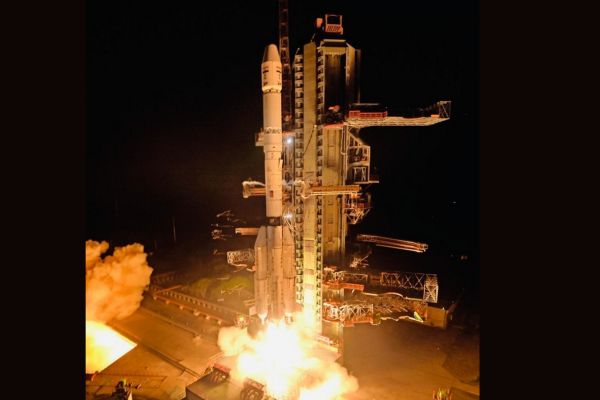
Launching aboard the GSLV-F18 from the Second Launch Pad at the Satish Dhawan Space Centre in Sriharikota, Andhra Pradesh, the 2,232-kg satellite was accurately placed into its designated Geosynchronous Transfer Orbit. The mission marked the 20th flight of the Geosynchronous Satellite Launch Vehicle (GSLV) and underscored ISRO’s growing operational efficiency and reliability.
NVS-03 is the third satellite in ISRO’s second-generation navigation satellite series and has been developed to enhance the continuity, accuracy and availability of services provided under the Navigation with Indian Constellation (NavIC) programme, India’s indigenous regional satellite navigation system.
The satellite brings several upgrades to the NavIC ecosystem. Among its key features is the introduction of the L1 frequency band, in addition to the existing L5 and S bands, allowing improved interoperability with a wider range of navigation receivers and commercial applications. NVS-03 also carries an indigenous atomic clock, a critical technology that enables highly precise positioning, navigation and timing services. Additional atomic clocks onboard further improve the reliability and resilience of the system.
The enhanced satellite is expected to support a broad range of civilian and strategic applications, including transportation, maritime operations, disaster management, surveying, telecommunications, precision agriculture and national security requirements.
The mission forms part of India’s broader effort to reduce dependence on foreign navigation systems and strengthen its sovereign technological capabilities.
Congratulating the ISRO team, Prime Minister Narendra Modi described the mission as an important step in strengthening India’s indigenous navigation infrastructure and advancing the country’s vision of self-reliance in critical technologies. Vice President C.P. Radhakrishnan also hailed the success, saying it reflected India’s growing expertise in advanced space technologies while further boosting the capabilities of NavIC.
ISRO Chairman Dr V. Narayanan praised the scientists, engineers, industrial partners and academic institutions associated with the mission.
He noted that GSLV-F18 successfully injected the satellite into its intended orbit with precision and highlighted another notable achievement: a turnaround time of just 56 days between two consecutive GSLV missions, the shortest such interval in the launch vehicle’s history.
Addressing the media after the launch, Dr Narayanan revealed that NVS-03 carries India’s third indigenous atomic clock to be placed in orbit, while two others are already operating successfully in space. He reiterated that NavIC is designed to provide reliable navigation services across India and up to 1,500 kilometres beyond the country’s borders.
The ISRO chief explained that the navigation programme envisages a constellation of seven satellites to provide seamless regional coverage. With NVS-03 adding further strength to the network, India moves closer to completing the constellation and enabling wider integration of NavIC services into mobile devices and other consumer applications.
The successful launch of NVS-03 not only fortifies India’s independent navigation architecture but also reinforces the country’s emergence as a leading global space power capable of developing and deploying sophisticated space technologies on its own.