In a significant and landmark deal, Australia has agreed to export uranium to India for nuclear power generation while restricting its usage for manufacturing nuclear missiles.
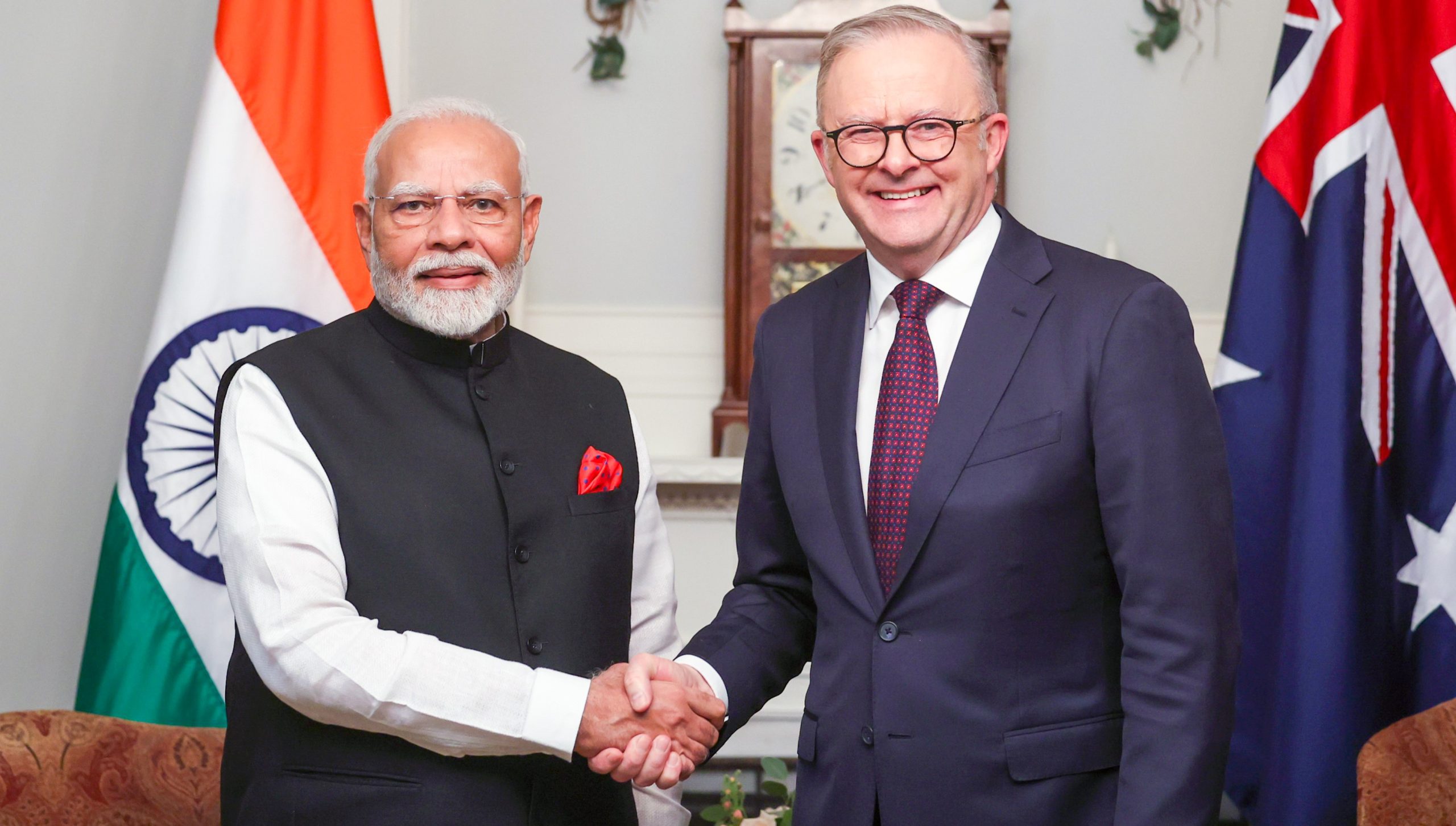
The announcement was made in Melbourne on Thursday the 9th of July 2026 in a joint conference held by the Prime Minister Narendra Modi with his Australian counterpart Anthony Albanese.
The Australian decision comes-in after along delay and stalemate at their part to sell uranium to India.
India had signed the civil nuclear deal with Australia in 2014. However, all shipments were stalled due to concerns about weapons use as India is not a signatory to the Nuclear Non-Proliferation Treaty.
India is expending its capacity to produce clean while targeting a tenfold increase in nuclear generation capacity to 100 giga watts by 2047.
Australia has the world’s largest known uranium resources, but the country doesn’t use any nuclear power or weapons and all uranium is exported.
India, which has a population of 1.4 billion people and a growing middle class, wants to install 100 gigawatts of nuclear power by 2047 — enough to power nearly 60 million Indian homes a year. But obtaining uranium hasn’t been simple.
India has doubled the amount of nuclear power installed in the country in the last decade, but that still makes up just 3% of its electricity.
India isn’t a signatory to the Nuclear Non-Proliferation Treaty, which recognizes only the United States, China, Britain, France and Russia as nuclear weapons powers. Australia, which is a signatory country, refuses to sell uranium to non-signatories.
India says the treaty is discriminatory because it recognizes as legitimate nuclear weapon states only those that tested nuclear devices before January 1967, which would disqualify it permanently.
India was badly hit with international technology sanctions and uranium trade bans after it conducted nuclear tests in 1998.
The Nuclear Suppliers Group of countries, which includes the U.S., in 2008 granted a waiver allowing India to buy uranium from its members
To secure peace and stability across the Indo-Pacific, the leaders signed a landmark Joint Declaration on Defence and Security Cooperation, institutionalized an Annual Defence Ministers’ Dialogue, and launched a unified Maritime Security Collaboration Roadmap.
Describing India and Australia as “vibrant democracies and important ocean powers”, Prime Minister Modi said that the Indo-Pacific is not just a meeting point of two oceans but showcases the shared aspirations of like-minded democracies like India and Australia.
Addressing the media, he highlighted that the relationship has entered an expansive era anchored in deep mutual trust.
A major highlight of the summit was the significant momentum given to economic and trade integration.
Building on the success of the 2022 Economic Cooperation and Trade Agreement (ECTA), the two nations have committed to fast-tracking a balanced, ambitious, and mutually beneficial Comprehensive Economic Cooperation Agreement (CECA), alongside a Bilateral Investment Treaty.
The two leaders hailed a transformative “step change” in the bilateral relationship, locking in comprehensive frameworks for regional stability, energy security, and technological innovation.
To secure peace and stability across the Indo-Pacific, the leaders signed a landmark Joint Declaration on Defence and Security Cooperation, institutionalized an Annual Defence Ministers’ Dialogue, and launched a unified Maritime Security Collaboration Roadmap.
Describing India and Australia as “vibrant democracies and important ocean powers”, Prime Minister Modi said that the Indo-Pacific is not just a meeting point of two oceans but showcases the shared aspirations of like-minded democracies like India and Australia.
Addressing the media, he highlighted that the relationship has entered an expansive era anchored in deep mutual trust.
A major highlight of the summit was the significant momentum given to economic and trade integration. Building on the success of the 2022 Economic Cooperation and Trade Agreement (ECTA), the two nations have committed to fast-tracking a balanced, ambitious, and mutually beneficial Comprehensive Economic Cooperation Agreement (CECA), alongside a Bilateral Investment Treaty.
Strategic technology and resource security also reached new heights with the operationalisation of the ‘Australia-India Partnership on Cyber, Critical Technologies and Supply Chains’ (AI-PACTS) and a dedicated Critical Minerals Corridor.
Educational integration also reached unprecedented heights, with new university branch campuses expanding into Bengaluru and Gurugram. Albanese emphasised that the ultimate heart of this future-ready partnership remains the vibrant Indian diaspora bridging both nations.
This landmark summit signals a historic “step change” as New Delhi and Canberra systematically lock in a future-proof architecture for the Indo-Pacific.
By transitioning from traditional trade to critical high-tech defence corridors, fast-tracking the ambitious CECA, and unleashing long-term uranium exports under a historic nuclear arrangement, both nations have elevated mutual trust to an unprecedented scale.
While Prime Minister Albanese correctly identified our one-million-strong diaspora as the ultimate heartbeat of this alliance, Prime Minister Modi flawlessly captured our momentum, proving that our shared decisions are swift as a T-20, our focus is razor-sharp like a One-Day, and this strategic partnership is as deep and enduring as a classic Test match.