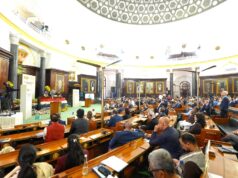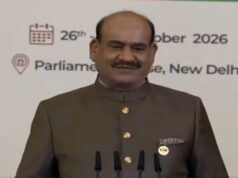
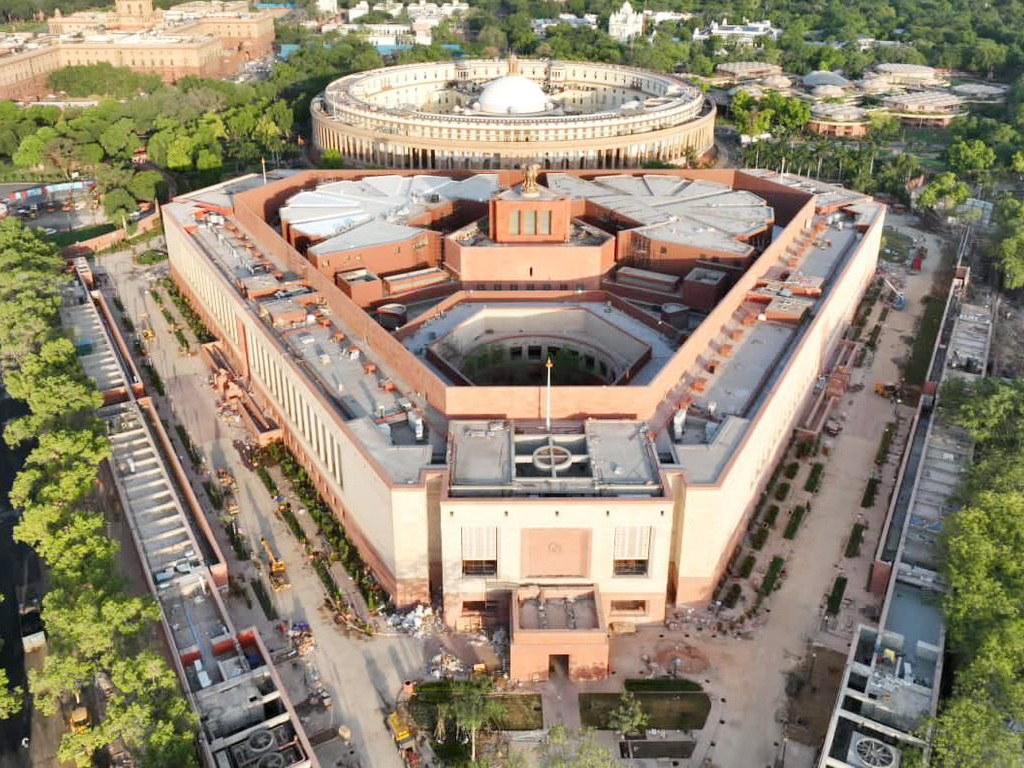
The Centre has decided to reconvene Parliament at short notice next week, with the Lok Sabha scheduled to meet on November 30 and the Rajya Sabha on December 2 for what the government has described as the transaction of “essential government business”.
Announcing the decision, Union Parliamentary Affairs Minister Kiren Rijiju said the government has requested the Speaker of the Lok Sabha and the Chairman of the Rajya Sabha to resume sittings of the two Houses. Subject to legislative requirements, the proceedings are expected to conclude on December 3.
“The Government has requested Hon’ble Speaker, Lok Sabha and Hon’ble Chairman, Rajya Sabha to reconvene Lok Sabha on November 30 and Rajya Sabha on December 2 respectively to transact essential Government Business,” Rijiju said in a post on X.
However, the government has not disclosed the agenda for the brief sitting, triggering intense political speculation over the possibility of major legislation being introduced or taken up during the session.
Among the issues generating discussion in political circles are proposals related to delimitation of parliamentary constituencies, implementation aspects of the Women’s Reservation law, and other pending legislative measures. Opposition parties are also expected to seek clarity on the government’s agenda before the Houses assemble.
Adding to the political significance of the development, the Congress has convened a meeting of its Parliamentary Strategy Group in New Delhi to formulate its approach for the upcoming sitting.
The decision is noteworthy because Parliament has not met since the conclusion of the Monsoon Session on August 13, 2026.
While both Houses were adjourned sine die on that date, they were not formally prorogued, creating an unusual constitutional situation.
As a result, the government has been able to recall Parliament without summoning a fresh session.
Under parliamentary procedure, an unprorogued House can be reconvened at short notice by the presiding officers, allowing the government greater flexibility in scheduling urgent legislative business.
Parliamentary observers note that the gap between the August adjournment and the November recall is among the longest periods during which Parliament remained adjourned without prorogation, making the forthcoming sitting procedurally significant as well as politically consequential.
With the government remaining tight-lipped about the business to be transacted, opposition parties are expected to press for details regarding the legislative priorities behind the surprise recall.
The brevity of the proposed sitting, lasting only a few days, has further fuelled speculation that specific high-priority measures could be on the government’s agenda.
The proceedings beginning on November 30 are therefore likely to be closely watched for indications of the Centre’s legislative and political priorities ahead of the next parliamentary calendar.