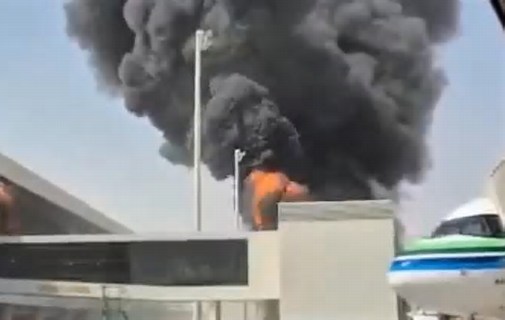
India has strongly condemned the latest missile attack on Riyadh’s King Khalid International Airport, which killed 12 people and injured more than 300, as Houthi attacks on Saudi Arabia enter a dangerous new phase.
In a statement issued early on Sunday the 11th of October 2026, the Ministry of External Affairs (MEA) denounced the repeated attacks on Riyadh airport, including the October 10 strike that resulted in casualties and damage to civilian infrastructure.
“We strongly condemn the repeated attacks on Riyadh’s King Khalid International Airport over the past few days, including the dastardly attack on October 10, which have led to loss of lives, injuries and damage to property,” the MEA said.
India expressed condolences to the families of those killed and wished a speedy recovery to the injured. It said attacks on civilians and civilian infrastructure were “completely unacceptable” and must cease immediately.
The MEA also reaffirmed India’s solidarity with Saudi Arabia, stating that New Delhi stands with the Kingdom in defence of its sovereignty and hopes peace and normalcy return to the region at the earliest.
The attack is among the deadliest strikes on Saudi civilian infrastructure in recent years. Saudi authorities have blamed Yemen’s Iran-backed Houthi movement, which has repeatedly targeted airports, oil facilities, military bases and critical infrastructure using ballistic missiles, cruise missiles and armed drones.
King Khalid International Airport, one of the Kingdom’s busiest aviation hubs, has emerged as a key target in the conflict.
The latest strike has reignited concerns over the vulnerability of civilian infrastructure and the growing reach of Houthi long-range weapons.
The attack comes amid renewed fighting in Yemen after the breakdown of a period of relative calm.
The Houthis have intensified attacks against Saudi targets, while Saudi-backed forces have expanded military operations inside Yemen.
The escalating confrontation risks widening regional instability and disrupting aviation and commercial activity across the Gulf.
For India, developments in Saudi Arabia carry particular significance. The Kingdom hosts one of the largest overseas Indian communities and remains a critical energy partner.
Any prolonged escalation affecting airports, shipping routes or energy infrastructure could have broader economic and security implications.
India has consistently called for restraint, protection of civilians and adherence to international law while maintaining close strategic ties with Riyadh.
Sunday’s statement signals New Delhi’s concern over attacks targeting civilian facilities and their potential impact on regional stability.
Timeline: Major Houthi Attacks on Saudi Arabia
May 2015: Cross-border Houthi attacks on Saudi territory marked the beginning of an intensified phase of strikes against the Kingdom.
October 2016: Saudi Arabia intercepted a ballistic missile reportedly aimed toward the holy city of Makkah.
November 4, 2017: A ballistic missile was launched toward Riyadh’s King Khalid International Airport. Saudi air defences intercepted the projectile.
June 12, 2019: A cruise missile struck Abha International Airport, injuring 26 civilians.
June 23, 2019: Another attack on Abha Airport killed one civilian and injured 21 others.
July 2, 2019: A drone strike on Abha Airport injured nine civilians, including an Indian national.
September 2019: Drone and missile attacks on Saudi Aramco facilities at Abqaiq and Khurais temporarily disrupted nearly half of Saudi oil production, highlighting the strategic reach of Houthi capabilities.
March 2022: Coordinated missile and drone attacks targeted Saudi energy facilities and infrastructure ahead of a Formula One event in Jeddah.
October 6-7, 2026: Attacks on Abha International Airport and King Khalid International Airport reportedly killed three people and injured dozens.
October 10, 2026: A major strike on King Khalid International Airport killed 12 people and injured more than 300, drawing international condemnation, including from India.
The latest attack underscores how civilian aviation infrastructure has become a central target in the Saudi-Houthi conflict, raising concerns about regional security and the safety of international air travel.