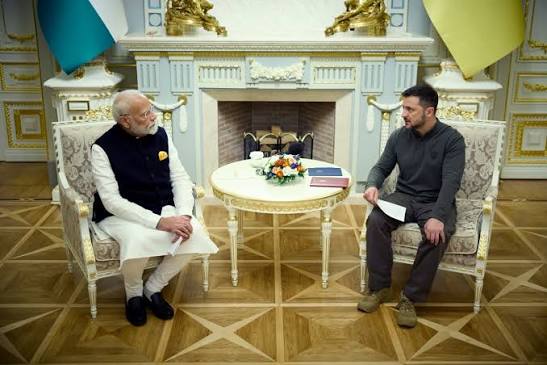
India on Monday reinforced its diplomatic engagement with both Ukraine and Russia as efforts to revive peace negotiations gathered momentum, with Prime Minister Narendra Modi speaking to Ukrainian President Volodymyr Zelensky and External Affairs Minister S. Jaishankar separately holding discussions with Russian Foreign Minister Sergey Lavrov.
The parallel engagements came ahead of proposed talks in Abu Dhabi involving Ukraine, Russia and the United States, a diplomatic initiative being closely watched for signs of progress towards ending a conflict that has entered its fifth year.
During his conversation with Zelensky, Modi reiterated India’s long-standing position that the Russia-Ukraine conflict should be resolved through dialogue and diplomacy, while reaffirming New Delhi’s willingness to support efforts aimed at achieving a peaceful settlement.
The Prime Minister said he appreciated Zelensky’s assessment of the evolving situation, including humanitarian concerns and ongoing international initiatives aimed at restoring peace.
Modi also underlined India’s commitment to contributing constructively to efforts seeking an end to hostilities.
The two leaders reviewed bilateral relations and agreed to further strengthen cooperation across a range of sectors, reflecting the steady political engagement maintained between New Delhi and Kyiv despite the continuing conflict.
Zelensky said he briefed Modi on recent diplomatic developments and preparations for the upcoming discussions in Abu Dhabi.
The Ukrainian leader stressed the need for meaningful de-escalation efforts and expressed hope that the latest diplomatic push could help advance prospects for peace.
In a separate development, Jaishankar spoke with Lavrov on issues related to the Ukraine conflict and ongoing diplomatic initiatives, highlighting India’s continued engagement with Moscow even as it maintains dialogue with Kyiv and other international stakeholders.
The twin outreach underscored New Delhi’s effort to preserve communication channels with all major parties involved in the conflict, a position India has consistently maintained since the outbreak of hostilities.
Indian diplomacy has focused on encouraging negotiations while engaging with Russia, Ukraine, the United States and European countries on issues ranging from humanitarian assistance and civilian safety to food security and maritime trade.
Ukraine also indicated that discussions touched upon initiatives related to Black Sea grain exports and food corridors, areas that have remained important for global food supplies since the conflict disrupted agricultural shipments from the region.
As international attention turns to the proposed Abu Dhabi talks, India’s latest outreach reflects its continuing support for a negotiated resolution and its effort to remain engaged in diplomatic initiatives aimed at ending one of the world’s most consequential geopolitical conflicts.